I’ll start with an observation from conversations with course designers: in a small arena, fitting the obstacles is only part of the problem. A layout can fit on paper but leave an awkward approach to the next fence.
If you had to fix just one thing first in a tight course, would you change the distances, the turns, or the overall flow? Even a one-sentence answer would help.
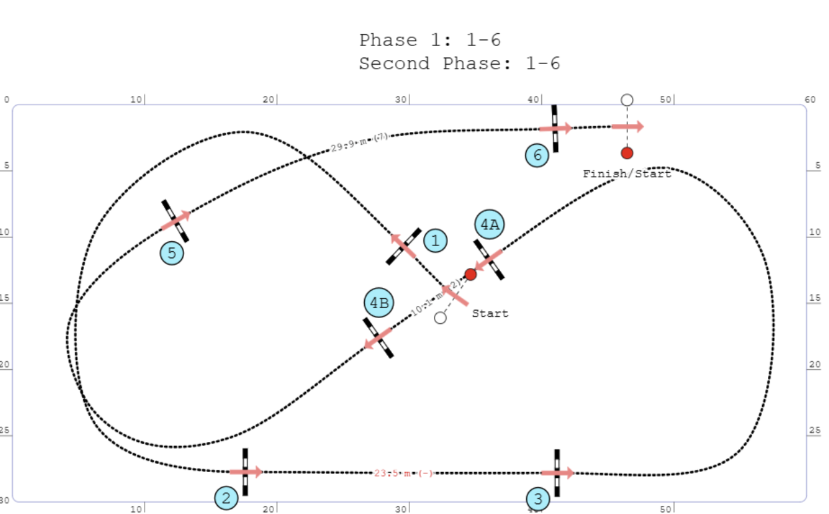
Found this one very useful for a small arena, works really well and jumps very nice backwards also. Originally intended for a 20x60 arena but can work in smaller arenas if it is built right!
I’d Ignore the distances on the plan as I just did it for the shape of the track. I would only use distances appropriate for the height your jumping, the level of the rider/horse combination and the quality of the surface your jumping on.